Journal of Seven Heavens

Journal of Seven Heavens

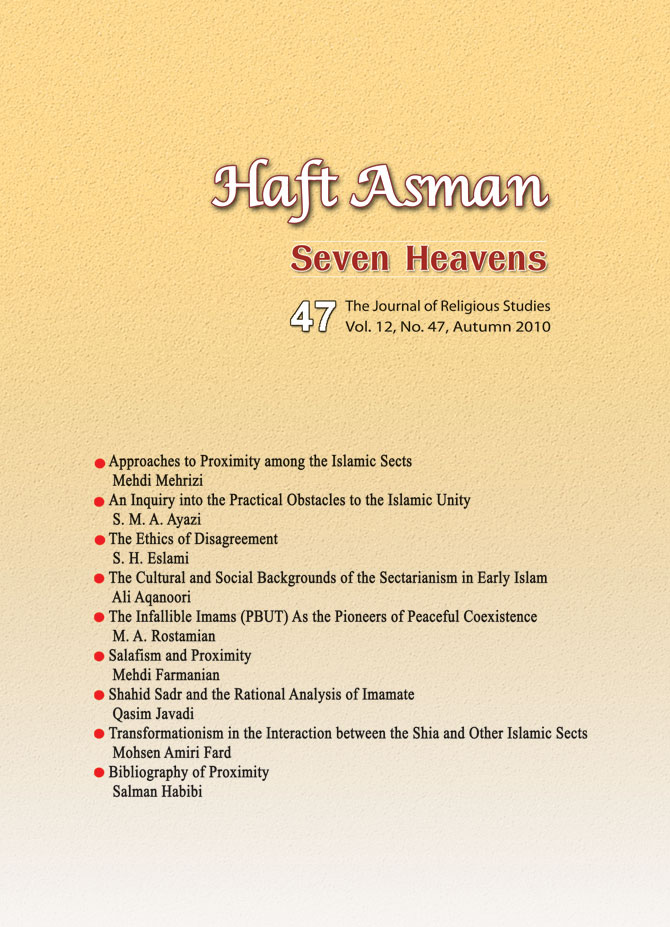
The Infallible Imams (PBUT) As the Pioneers of Peaceful Coexistence

Document Type : Original Article

Author
Assistant
Abstract
The present paper considers the problem of peaceful coexistence from the viewpoints of the Infallible Imams (PBUT) in terms of its necessity,background, and the ways of attaining it. Putting emphasis upon the positive consequences of the peaceful coexistence such as security, and the spread of the true religion, the Infallible Imams (PBUT) kept asking people to develop mutual cooperation. They have also showed that the just government possesses some characteristics which can prepare the ground for the peaceful coexistence. According to them, the consideration of the differences and degrees of faith as well as the establishment of common morality may pave the way for peaceful coexistence. Further, they maintain that there is a variety of ways in which we can attain peaceful coexistence; for example,compromise and mutual tolerance as regards religious and social matters. Respecting the adherents of other religions and participation in the ceremonies associated with them may be two other ways in which we can attain the peaceful coexistence.
Keywords

نهج‌البلاغه، تدوین توسط صبحی صالح، قم: مؤسسه دارالهجره.
آقانوری، علی (1387ش)، امامان شیعه و وحدت اسلامی، قم: انتشارات دانشگاه ادیان و مذاهب.
اسلامی، سیدحسن (1386ش)، «قاعده زرین در حدیث و اخلاق»، علوم حدیث.
الحر العاملی، محمد بن‌حسن (1409ق)، وسائل الشیعه، قم: مؤسسه آل‌البیت.
رستمیان، محمدعلی (1382ش)، حاکمیت سیاسی معصومین(ع)، قم: دبیرخانه مجلس خبرگان.
طوسی، محمد بن‌حسن (1365ش)، التهذیب، تهران: دار الکتاب الاسلامیه.
الکلینی، محمد بن‌یعقوب (1365ش)، الکافی، تهران: دار الکتاب الاسلامیه.
کریمی‌نیا، محمدمهدی (1382ش)، «ادیان الاهی و همزیستی مسالمت‌آمیز»، رواق اندیشه، ش26.
مجلسی، محمدتقی (1404ق)، بحار الانوار، بیروت: مؤسسه الوفاء.
محدث نوری، (1408ق)، مستدرک وسائل الشیعه، قم: موسسه آل‌البیت.
 

  • Receive Date 29 August 2010
  • Revise Date 29 September 2010
  • Accept Date 29 October 2010